

Regene Prıme
Orthopedic & Regenerative Center
Ортопедический и регенеративный центр
مركز تقويم وتجديد العظام
×
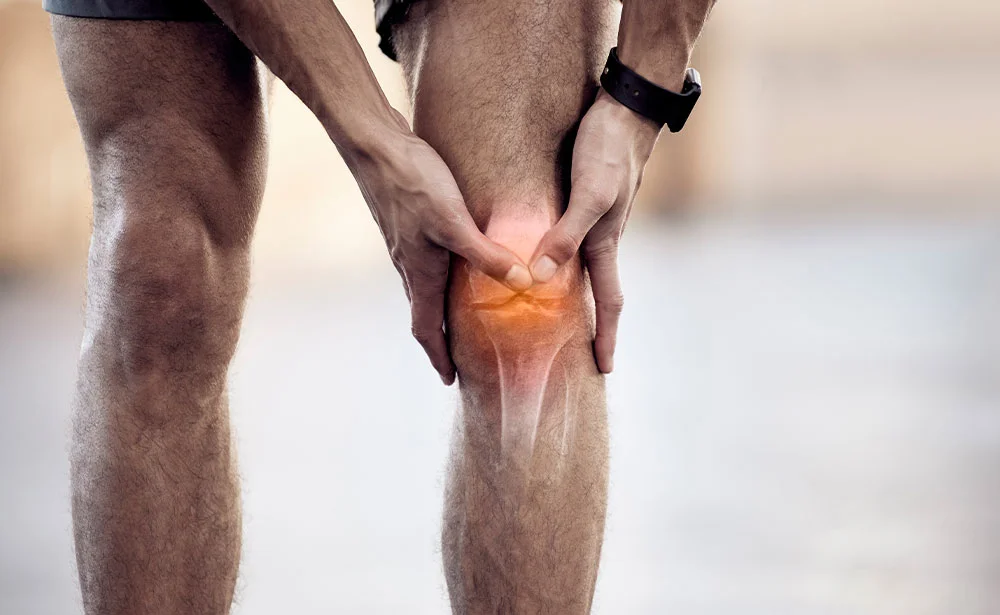
‘Knee Cap Laxity’ Warning from the Expert! Attention to Sound from Knee and Joint
Attention if you have pain in front of your knees while doing sports!
Kneecap laxity, which is a problem that is not widely recognised, is important in terms of the different problems it may cause if not paid attention. Orthopedics and Traumatology Specialist Prof. Dr. Gökhan Meriç, who pointed out that people with laxity in the kneecap may encounter much more serious problems in the knees with an incorrect movement, said, “If a person experiences pain in front of the knee, especially when doing sports, has difficulty climbing stairs and makes noise from his knees, he should definitely consult a physician.”
Although it is not common, knee cap laxity, which is a serious orthopaedic problem, is important due to the different problems it may cause if not taken care of. Orthopedics and Traumatology Specialist Prof. Dr. Gökhan Meriç explained that according to the researches, early and unconscious sports activities are an important factor in the emergence of this problem.
Pointing out that knee pain due to muscle weakness has started to occur in many people especially recently, Yeditepe University Kosuyolu Hospital Orthopedics and Traumatology Specialist Prof. Dr. Gökhan Meriç said, “During the pandemic period, many of us were at home and there are still people who continue to work at home. In this case, joint problems and knee pain due to muscle weakness became more common. Therefore, the need to do sports arose. However, intense sports activity to be done suddenly causes extra load on the joints because the muscles are weak and may cause different problems in the knees.”
WOMEN ARE MORE AT RISK
Stating that especially women are more likely to encounter this problem because their joints are a little looser than normal, Prof. Dr. Gökhan Meriç said, “Laxity in the kneecap is what we call patellar instability. In this case, if exercises such as bending and lifting and squats are emphasised in an intense sports activity, anterior knee pain may occur due to excessive looseness in the kneecap,” he warned.
ATTENTION TO SPORTS ACTIVITIES
“There is a predisposition to anterior knee pain or cartilage damage, especially in those who suffer from anterior knee pain, need to extend their feet when sitting for a long time, feel pain when going up and down stairs, or think that their knees are making noise,” said Prof. Dr. Meriç and drew attention to the points to be considered while doing sports: “Not every sports activity is suitable for every patient. Especially people who go to the gym for group activities should pay attention. Likewise, it may not be appropriate to have 20 people do the same type of exercise in group exercises in gyms. If a movement you perform while doing sports causes pain in front of the knee or in the knee joint, stop that exercise. Because going over it or forcing it can cause serious damage in the future.”
YOUNG PATIENTS SHOULD BE WARNED
Stating that the anatomical structure of the person is also important in kneecap laxity, Prof. Dr. Gökhan Meriç said, “Looseness in the joints from a very young age of 15-16 may cause excessive load on them and cause pain here. Young people whose cartilages have never been damaged and who do not have serious problems in their knees can also lose their knee and joint health while doing sports. It is necessary to warn them about this and inform them to do sports consciously. However, if our patients suffer from anterior knee pain, especially during sports, we can follow the pain for a few days. We can recommend ice application, rest and painkiller treatment. However, if the patient’s pain continues for 15 days, if there is an increasing pain, if there is a sound coming from the knee or joint, he should definitely consult a specialist.”
“CONSULT A SPECIALIST IF THERE IS A SOUND COMING FROM THE KNEE AND JOINT
Prof. Dr. Gökhan Meriç shared the following information about the treatments applied in knee cap laxity: “If the patient has constant anterior knee pain, if it is at a level that will affect his daily life, if he has difficulty climbing stairs, if there is excessive play in the kneecap, he should see a physician. Depending on the patient’s condition, different treatments such as medication, exercise and physiotherapy, bandaging or knee brace use can be applied. If the patient’s complaints become chronic, if there is damage to the articular cartilage, therapeutic injection treatments can be applied to the articular cartilage. If the complaints progress seriously, then an intervention may be required. These surgical interventions are performed closed or open and vary according to the patient’s age, activity level and the structure of the kneecap.”
CAN CAUSE KNEE CAP DISLOCATION!
Prof. Dr. Meriç stated that they recommend patients to strengthen the upper leg and hip muscles and to avoid excessive bending and lifting exercises in order to prevent anterior knee pain and concluded his words as follows: “In people with very intense laxity in the kneecap, even dislocation of the kneecap may develop with a reverse movement. Although dislocation is very rare, it is a serious problem. It causes damage to the ligaments and knee cartilages that hold the kneecap in place. This causes severe knee pain and restricts the patient’s daily life. Intervention may be required in most patients after kneecap dislocation.”